



 Jefferson Marin
¿Qué es?
¿Cómo se diagnostica y trata?
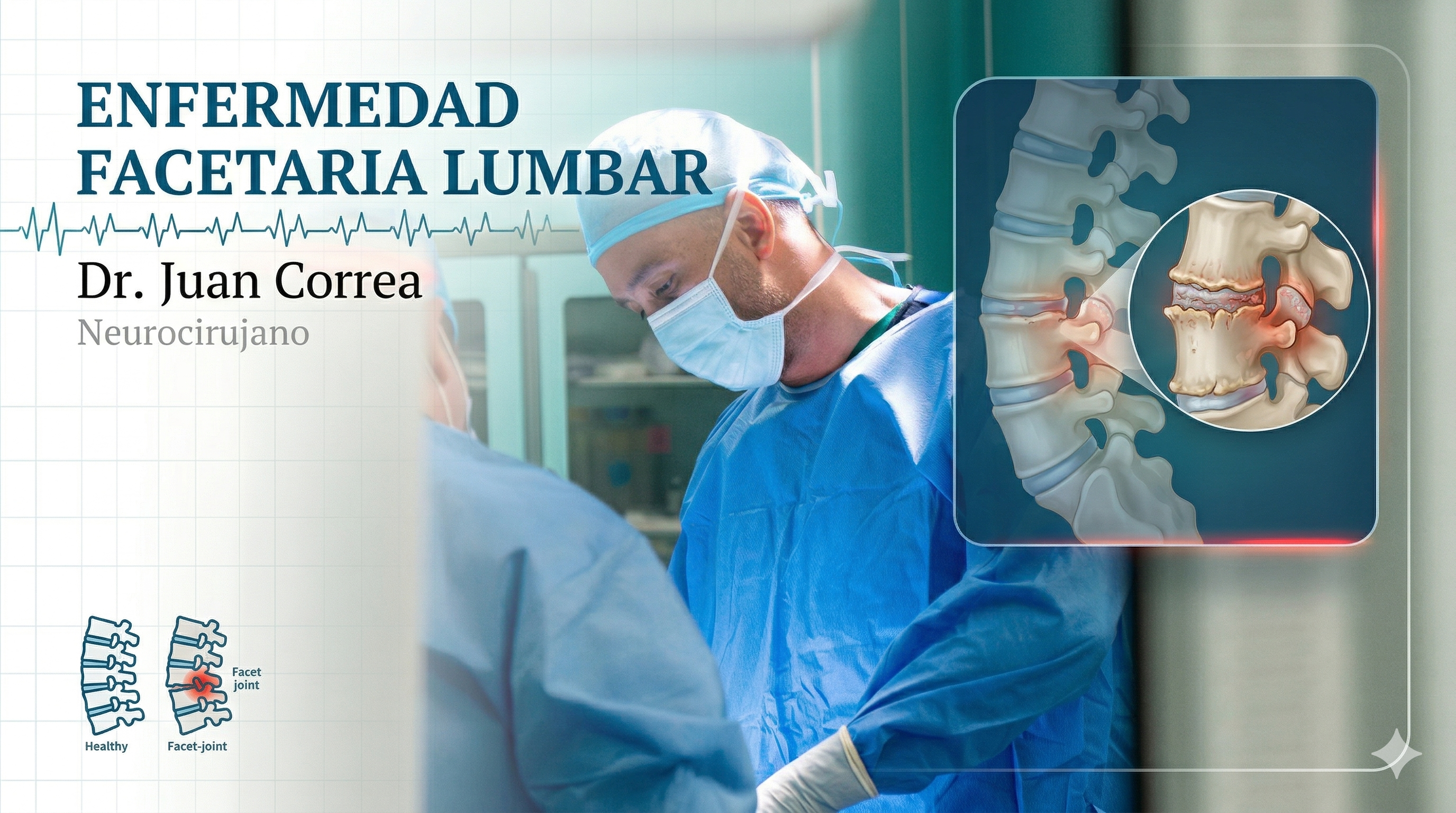
La enfermedad facetaria lumbar es una causa frecuente, pero a menudo infradiagnosticada de dolor lumbar crónico. Suele deberse a artrosis de las articulaciones facetarias, especialmente en personas de más edad o con trabajos/deportes de sobrecarga lumbar.
Epidemiología y causas
- El dolor proveniente de facetas explica aproximadamente 10–40% de los casos de lumbalgia crónica, aumentando con la edad (Perolat et al., 2018; Du et al., 2022; Van Den Heuvel et al., 2023; Ambrosio et al., 2022).
- La causa más común es la artrosis facetaria degenerativa; también influyen espondilolistesis, degeneración discal, cirugías previas y deportes con hiperextensión/rotación lumbar (gimnasia, surf, yoga) (Perolat et al., 2018; Du et al., 2022; Van Den Heuvel et al., 2023; Farinha & Moura, 2022; Ambrosio et al., 2022).
Panorama temporal
- 2007
- 2 papers: (Cohen & Raja, 2007; Kalichman & Hunter, 2007)- 2010
- 1 paper: (Varlotta et al., 2010)- 2018
- 1 paper: (Perolat et al., 2018)- 2019
- 1 paper: (Vega & Acevedo-González, 2019)- 2021
- 4 papers: (Potapov et al., 2021; Yarikov et al., 2022; Santellán-Hernández et al., 2021; Yuan et al., 2021)- 2022
- 4 papers: (Du et al., 2022; Musso et al., 2022; Farinha & Moura, 2022; Ambrosio et al., 2022)- 2023
- 3 papers: (Yoo & Kim, 2023; Van Den Heuvel et al., 2023; Vu et al., 2023)- 2024
- 3 papers: (Van Oosterwyck et al., 2024; Ross & Ard, 2024; Park et al., 2024)- 2025
- 1 paper: (Abe et al., 2025)Figure 1: Evolución de estudios sobre síndrome facetario lumbar.
Clínica y diagnóstico
- Dolor axial lumbar, unilateral o bilateral, que puede irradiar a glúteos, ingles o muslos pero suele no bajar de la rodilla y sin déficit neurológico (pseudo-radicular) (Du et al., 2022; Van Den Heuvel et al., 2023; Van Oosterwyck et al., 2024; Farinha & Moura, 2022; Yuan et al., 2021).
- Empeora con extensión/rotación y mejora con reposo (Du et al., 2022; Van Den Heuvel et al., 2023; Vega & Acevedo-González, 2019; Farinha & Moura, 2022).
- La exploración e imágenes (RX, RM, TC, SPECT) solo sugieren, pero no confirman el origen facetario (Perolat et al., 2018; Du et al., 2022; Van Den Heuvel et al., 2023; Van Oosterwyck et al., 2024; Ambrosio et al., 2022).
- El estándar diagnóstico es el bloqueo diagnóstico (bloqueo de rama medial o intraarticular con anestésico) aunque con falsos positivos; sigue siendo la prueba más fiable (Perolat et al., 2018; Cohen & Raja, 2007; Du et al., 2022; Van Den Heuvel et al., 2023; Ambrosio et al., 2022; Yuan et al., 2021).
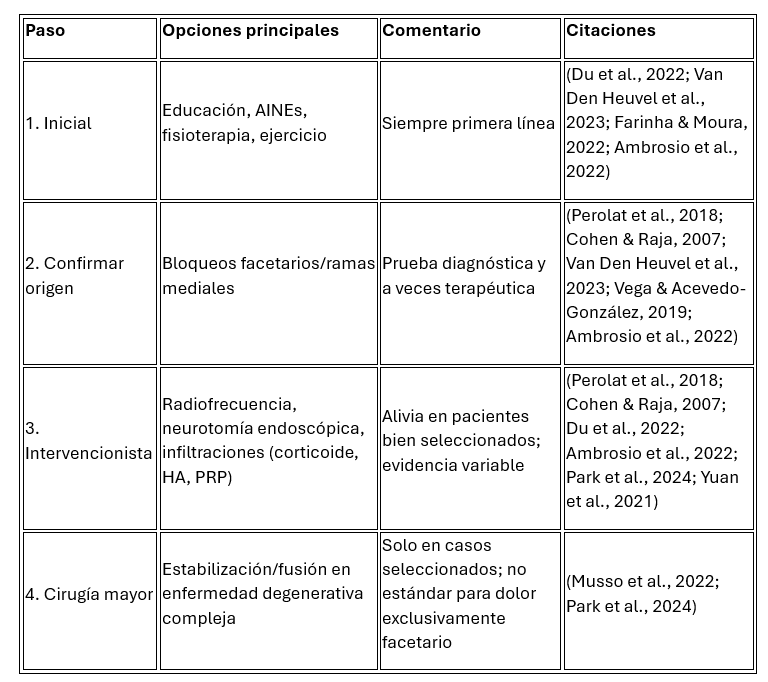
Figure 2: Resumen de escalones diagnósticos y terapéuticos.
Tratamientos mínimamente invasivos
- Radiofrecuencia de ramas mediales: eficaz en pacientes seleccionados tras bloqueo positivo; alivio significativo, aunque puede ser limitado en el tiempo por regeneración nerviosa (Perolat et al., 2018; Cohen & Raja, 2007; Du et al., 2022; Van Den Heuvel et al., 2023; Ambrosio et al., 2022).
- Neurotomía endoscópica: meta‑análisis en red la sitúa como la más efectiva en reducción de dolor y discapacidad hasta 12 meses (Park et al., 2024).
- Infiltraciones intraarticulares: corticoides, ácido hialurónico o PRP muestran beneficios modestos y resultados mixtos; PRP podría ofrecer mejor efecto a largo plazo que corticoide (Perolat et al., 2018; Du et al., 2022; Ambrosio et al., 2022).
Complicaciones específicas
- Infrecuente pero importante: artritis séptica facetaria, típica en columna lumbar, asociada a bacteriemia y abscesos epidurales, con buena evolución si se trata con antibióticos (Ross & Ard, 2024).
Conclusión
La enfermedad facetaria lumbar es una causa frecuente de dolor lumbar mecánico, sobre todo degenerativo y relacionado con la edad o sobrecargas. El diagnóstico clínico e imagenológico es orientador, pero la confirmación se basa en bloqueos diagnósticos. El manejo progresa desde tratamiento conservador a intervenciones mínimamente invasivas (sobre todo radiofrecuencia y neurotomía endoscópica), reservando la cirugía estructural para casos complejos.
Dr. Juan Correa
Neurocirujano
Tel. 6301-9913
References
Perolat, R., Kastler, A., Nicot, B., Pellat, J., Tahon, F., Attyé, A., Heck, O., Boubagra, K., Grand, S., & Krainik, A. (2018). Facet joint syndrome: from diagnosis to interventional management. Insights into Imaging, 9, 773 – 789. https://doi.org/10.1007/s13244-018-0638-x
Cohen, S., & Raja, S. (2007). Pathogenesis, Diagnosis, and Treatment of Lumbar Zygapophysial (Facet) Joint Pain. Anesthesiology, 106, 591-614. https://doi.org/10.1097/00000542-200703000-00024
Du, R., Xu, G., Bai, X., & Li, Z. (2022). Facet Joint Syndrome: Pathophysiology, Diagnosis, and Treatment. Journal of Pain Research, 15, 3689 – 3710. https://doi.org/10.2147/jpr.s389602
Yoo, Y., & Kim, K. (2023). Facet joint disorders: from diagnosis to treatment. The Korean Journal of Pain, 37, 3 – 12. https://doi.org/10.3344/kjp.23228
Van Den Heuvel, S., Cohen, S., De Andrés Ares, J., Van Boxem, K., Kallewaard, J., & Van Zundert, J. (2023). 3. Pain originating from the lumbar facet joints. Pain Practice, 24, 160 – 176. https://doi.org/10.1111/papr.13287
Potapov, V., Sorokovikov, V., Larionov, S., & Zhivotenko, A. (2021). Facet syndrome. Minimally invasive surgical treatment. (Clinical case with a literature re-view).. Journal of Clinical Practice. https://doi.org/10.17816/clinpract81435
Van Oosterwyck, W., Cruyssen, P., Castille, F., Van De Kelft, E., & Decaigny, V. (2024). Lumbar Facet Joint Disease: What, Why, and When?. Life, 14. https://doi.org/10.3390/life14111480
Vu, P., Bansal, V., Malik, A., Ryder, A., & Chen, J. (2023). Lancinating lumbar facet syndrome: a congenitally absent facet joint.. Pain management. https://doi.org/10.2217/pmt-2023-0065
Yarikov, A., Shpagin, M., Pavlinov, S., Meredzhi, A., Orlov, A., Denisov, A., Perlmutter, O., Fraerman, A., & Sosnin, A. (2022). Lumbar facet syndrome. Vestnik nevrologii, psihiatrii i nejrohirurgii (Bulletin of Neurology, Psychiatry and Neurosurgery). https://doi.org/10.33920/med-01-2201-06
Ross, J., & Ard, K. (2024). Septic Arthritis of the Spinal Facet Joint: Review of 117 Cases. Open Forum Infectious Diseases, 11. https://doi.org/10.1093/ofid/ofae091
Musso, S., Buscemi, F., Bonossi, L., Silven, M., Torregrossa, F., Iacopino, D., & Grasso, G. (2022). Lumbar facet joint stabilization for symptomatic spinal degenerative disease: A systematic review of the literature. Journal of Craniovertebral Junction & Spine, 13, 401 – 409. https://doi.org/10.4103/jcvjs.jcvjs_112_22
Santellán-Hernández, J., Córdoba-Mosqueda, M., Aguilar-Calderón, J., Bravo-Ángel, U., Mendez-Olan, R., Dueñas-Espinoza, M., Reyes-Rodríguez, V., & García-González, U. (2021). Postsurgical lumbar facet joint syndrome: Therapeutic results of facet infiltration. Interdisciplinary Neurosurgery. https://doi.org/10.1016/j.inat.2020.101056
Kalichman, L., & Hunter, D. (2007). Lumbar facet joint osteoarthritis: a review.. Seminars in arthritis and rheumatism, 37 2, 69-80. https://doi.org/10.1016/j.semarthrit.2007.01.007
Abe, H., Kato, S., Takami, H., Kodama, S., Hamada, M., Taniguchi, Y., Sumitani, M., & Oshima, Y. (2025). Expert Consensus-Based Criteria for Identifying Lumbar Facet Joint Pain in Primary Care: Development Using Factor Analysis and a Modified Delphi Method. Pain and Therapy, 15, 235 – 249. https://doi.org/10.1007/s40122-025-00788-6
Vega, J., & Acevedo-González, J. (2019). Clinical Diagnosis Scale for Pain Lumbar of Facet Origin: Systematic Review of Literature and Pilot Study. Neurosurgery. https://doi.org/10.1016/j.neucie.2018.07.001
Farinha, P., & Moura, D. (2022). Síndrome Facetária Lombar. Revista de Medicina Desportiva Informa. https://doi.org/10.23911/sindroma_facetario_2022_set
Ambrosio, L., Vadalà, G., Russo, F., Pascarella, G., De Salvatore, S., Papalia, G., Ruggiero, A., Di Folco, M., Carassiti, M., Papalia, R., & Denaro, V. (2022). Interventional Minimally Invasive Treatments for Chronic Low Back Pain Caused by Lumbar Facet Joint Syndrome: A Systematic Review. Global Spine Journal, 13, 1163 – 1179. https://doi.org/10.1177/21925682221142264
Park, S., Park, J., Sokpeou, N., Jang, J., Kim, Y., Choi, Y., & Park, S. (2024). Radiofrequency treatments for lumbar facet joint syndrome: a systematic review and network meta-analysis. Regional Anesthesia & Pain Medicine, 50, 879 – 890. https://doi.org/10.1136/rapm-2024-105883
Varlotta, G., Lefkowitz, T., Schweitzer, M., Errico, T., Spivak, J., Bendo, J., & Rybak, L. (2010). The lumbar facet joint: a review of current knowledge: part 1: anatomy, biomechanics, and grading. Skeletal Radiology, 40, 13-23. https://doi.org/10.1007/s00256-010-0983-4
Yuan, H., Wang, C., & Wang, Y. (2021). Endoscopic joint capsule and articular process excision to treat lumbar facet joint syndrome: A case report. World Journal of Clinical Cases, 9, 8545 – 8551. https://doi.org/10.12998/wjcc.v9.i28.8545